
One cycle, two aims
Quenching raises hardness. Tempering gives back toughness so the part can work in service. Skipping temper leaves hardened steel brittle.
Hardening and tempering
Quench and temper job work at our plant in Ludhiana (Pawa, G.T. Road), for production steel parts that need hardness and toughness together.
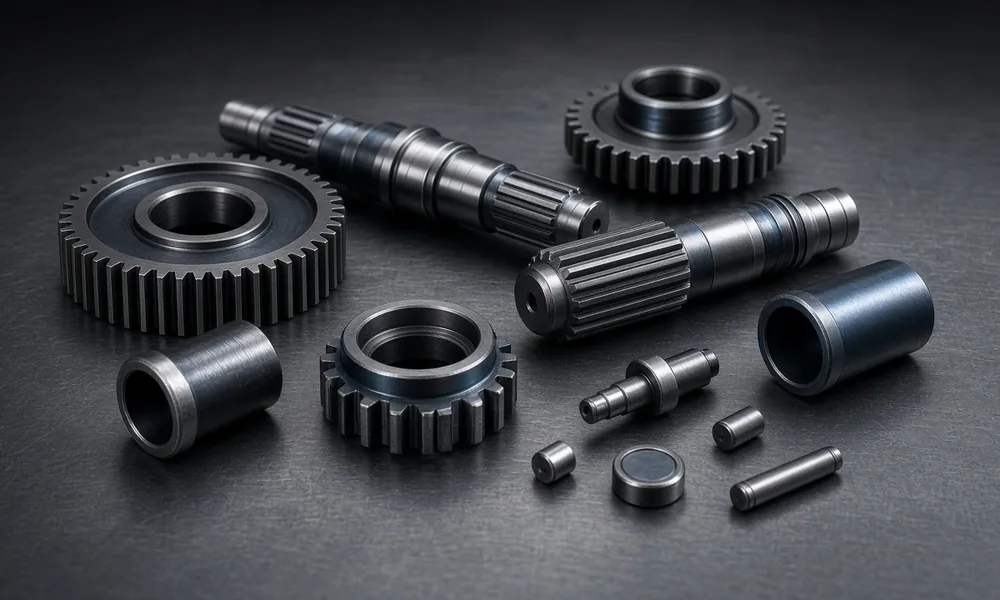
Hardening and tempering
Hardening and tempering services in Ludhiana (Pawa, G.T. Road) are for steel parts that must be hard in service and still tough enough to survive it.
Hardening on its own is only half the job. A quenched part is hard and, until it is tempered, too brittle for most production uses. Tempering is a second heating, lower than the hardening range, that lets the structure relax enough for the hardness and toughness on your drawing to sit together. The cycle follows the grade and the specification, and we confirm it with you before a lot is loaded.
In practice
Quenching raises hardness. Tempering gives back toughness so the part can work in service. Skipping temper leaves hardened steel brittle.
Grade, section and the hardness on the specification decide the cycle. It is agreed before the lot is loaded, then kept the same for repeat lots.
Hardness is tested in our own lab. Lot records tie the result to the inward documents.
Scale after treatment can go to shot blasting, and the part can be machined here, instead of moving to another supplier.
Process flow
The same sequence for every lot.
Volume lots of small and medium parts run on the continuous furnace described under mesh belt hardening and tempering job work. If the drawing asks for a refined structure before this step, normalizing can come first. After treatment, shot blasting removes scale and CNC machining can finish the part in the same plant at Ludhiana (Pawa, G.T. Road).
The parent page, heat treatment in Ludhiana, compares this route with normalizing.
Include the grade and the hardness on the specification. We will tell you whether hardening and tempering at this plant fits the part, and what a trial lot would look like.
Send your drawing for a quoteFAQ
Straight answers before you raise an RFQ.
Hardening heats the steel through the range suited to its grade and quenches it so hardness increases. Tempering reheats the part below that range so brittleness drops and hardness moves to the value on your specification. Both steps are part of the same job. The part is checked for hardness before it is released.
Yes. Hardening and tempering services in Ludhiana are job work at our plant in Ludhiana (Pawa, G.T. Road). Production volumes of small and medium parts run as mesh belt hardening and tempering.
Normalizing cools in air. It is used to even out grain and reduce stress, often before machining. Hardening uses a quench, so the hardness increase is greater, and tempering is then required so the part is not left brittle. The drawing, not a catalogue, decides which one you need.
Repeat production parts whose size suits a continuous furnace: fasteners, pins, bushes, small gears, small shafts and similar steel components. If the section is large or the geometry is awkward, send the drawing anyway. We will say whether this route fits or whether another process in the plant is the better discussion.
The drawing, material grade, the hardness the specification asks for, quantity per lot and how often lots will come. Send your drawing for a quote. A trial lot is the usual way to start.
More capabilities
Mesh belt hardening & tempering and normalizing for production components.
Dedicated normalizing furnace to refine grain structure and relieve stresses before machining.
Production-focused CNC machining with repeatability and process discipline.
Surface cleaning, scale removal and preparation after manufacturing or heat treatment.
Heavy-duty hydraulic presses for forming, pressing and allied operations.
Share the drawing, grade and the hardness on your specification. We will confirm whether this route fits.